










































Catalyzing Broadband Internet in Africa - Ensuring Economic and Social Inclusion
"Broadband Internet creates an environment that spurs business growth, nurtures science and innovation, and empowers people."
This project aims to inform policies in Kenya, South Africa, and Nigeria that help marginalised groups in Africa, such as women and the economically poor, to take advantage of the social and economic opportunities of broadband internet. With International Development Research Centre (IDRC) support, the South-Africa-based think tank Research ICT Africa (RIA) is managing the project and conducting research in an effort to:
- determine the policy challenges related to providing affordable broadband services;
- influence policy processes with reliable evidence and evaluate policy outcomes;
- mobilise African research networks focused on broadband to identify innovative ideas and solutions that help to reduce inequality and poverty; and
- build African researchers' and policy leaders' capacity to undertake rigorous research that informs pro-poor broadband policies.
This project consolidates the 3-pronged research programme that has underpinned RIA's work to date: research to build an evidence base for policy and regulatory decision-making; research to inform education and training; and the research necessary for informed technical assistance to policymakers and regulators. The 2014-2016 RIA research agenda is grounded in an understanding of information and communication technology (ICT), broadband, and the internet as an ecosystem. This holistic approach enables the identification of linkages between different elements in the system, including users, networks, institutions, and players, and how the functioning of one part of the system is dependent on the successful functioning of other parts. RIA is conducting research into key areas of the ICT ecosystem in Africa, such as affordability, open access, digital rights, and gender issues. The RIA research agenda formalises an evidence-based approach to policy making through 3 key stages: data collection - e.g., via individual and household surveys; analysis - modelling, structuring, and organising data to tell a clear narrative and to identify the best points of policy intervention; and generalisation - using the intersection of data collection and analysis to provide tools for effective policy implementation that is applicable beyond individual countries and can be adapted to a broader range of countries.
To date, Catalyzing Broadband Internet in Africa has been involved in the following:
- Overcoming connectivity challenges through open access networks (supply side) - Following a methodology workshop held in April 2015 in Cape Town, this project has applied emerging theories of openness to propose public policy and regulatory frameworks to consider the potential advantages and disadvantages of openness at different points of policy design and implementation. A number of agencies and regional economic communities (RECs) have initiatives underway to understand the potential of open access networks. Open access networks refer to models where the physical layer - the fiber or wireless infrastructure - is owned by one company and the provision of services is run by other companies. RIA used this broad framework to assist the Communications Regulatory Association of South Africa (CRASA)'s investigation into open access and the development of regional guidelines. The research paper was completed and won the best paper award at Communication Policy Research South (CPRsouth) in Tanzania (2016). The second part of this project is focusing on public-private interplays as another solution to supply-side challenges to network upgrades and extensions in resource-constrained environments. The exploration of public WiFi is one sub-project being pursued here.
- Affordability, quality of service, and digital demand: stimulation for digital inclusion through pricing and quality of service - Noting that "[i]t is simply no longer possible to use the traditional OECD baskets to measure the cost of communicating in a converging environment", RIA is looking at voice and data in relation to each other and in a converged voice-data environment, where dynamically priced and bundled services (including zero-rated services) are increasingly the norm. Thus, the RIA African Mobile Pricing (RAMP) database has expanded to include a Value for Money Index (VMI), a Postpaid Value Index (PVI), and Bundled Value for Money Index (BVMI). The RAMP database has been linked to several other public domain data portals, including the University of Cape Town (UCT) economics open data project Datafirst, from which there have been a number of follow-up requests by both PhD students and researchers and from market research and commercial companies. The RAMP database is also available on a creative commons licence on the open portion of the commercial research and data company 80/20. Several governments and regulators request information for parliamentary inputs or public discussion documents, and the African Development Bank requested the pricing data and analysis for their ICT sector performance reviews of 3 least developed Southern African Development Community (SADC) countries. The African Union Commission also requested RIA be its training partner for the International Telecommunication Union (ITU) Indicator Development Symposium in Addis Ababa, Ethiopia, in October 2015, where the RIA databases were used to train national statistics officers and regulators in the collection and analysis of supply- and demand-side ICT indicators.
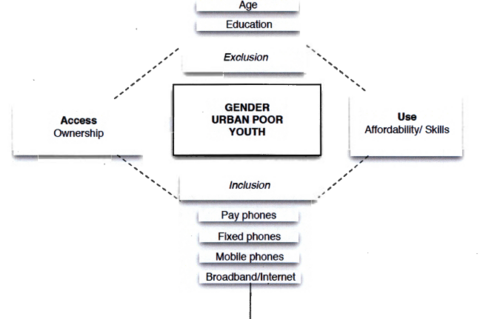
- Digital exclusion/inclusion: ICT access and use focusing on women, youth, and urban poor - Demand-side surveys will be conducted in Nigeria, Kenya, and South Africa in order to understand the links throughout the ICT ecosystem's different country contexts. Besides providing nationally representative demand-side data to inform point of intervention for national policy, the surveys will enable RIA to disaggregate representative data on various marginalised groups in order to understand better the nature of their exclusion, their communications strategies, and the ways in which ICT might assist in improving livelihoods and well-being. In light of possible government legislation that allows for surveillance and censorship of content online in South Africa, RIA plans to understand if users and non-users of social media in relation to protests, in particular against state institutions, are aware of these issues. Through focus group discussions around the #feesmustfall social networking campaign in South Africa, a resulting case study will also aim to shed light into understanding of awareness and perception of digital rights focusing on the freedom of expression, privacy protection, and safety and security online by young people - specifically, university students.
- Capacity-building and high-level skills development - Policy and regulatory development programme - For example, RIA collaborated with CETIC [Center of Studies on Information and Communication Technologies, Brazil], where RIA facilitated a 3-day "Indicators for Evidence-based Policy" course. RIA also trained regulators and policymakers in half of the sessions for the ITU/Addis Ababa University (AAU) indicator training programme in Addis Ababa. There is also a PhD collaboration on ICT policy and regulation at the UCT.
- Digital governance - Information controls and digital rights - RIA's research on internet governance and digital rights focuses on the offline-online dichotomy and its denial of human rights in democratic and semi-authoritarian regimes, as well as on the impact this may have on individual capabilities. In collaboration with Princeton University in the United States (US), RIA has piloted the use of measurement tools to assess the presence of filters, walls, and packet inspection. They have also commented on the South African draft online content regulation in addition to the draft cybersecurity and cybercrime bill.
In terms of dissemination, research outputs are made available on the RIA website, among other online locations. (Various policy briefs have been produced demonstrating the impact on regulatory interventions.) RIA Rap, the RIA blog, is open to any contributions on ICT policy and regulation. Although many researchers, media organisations, and advisors to governments receive RSS feeds from the RIA website, RIA says that using their research and expertise in face-to-face engagements is very powerful. This includes conferences, public hearings, seminars, and the like. For example, RIA has enjoyed high-level participation drawing on research findings of previous and current rounds of research at ITU Telecom 2015, ITU ICT Indicator symposium 2014 in Tbilisi, Internet Governance Forum (IGF) 2015 in Brazil, Afsig, African IGF, Stockholm Internet Forum, and International Institute of Telecommunications 2015. RIA researchers have engaged with the media, sharing research findings through interviews on the radio and on television, with newspapers, and the like.
Along with informing national and regional telecommunications policies, the intention is for this research to also contribute to the annual policy conference CPRsouth. Building on the contribution of the past conferences and seminars to African and Asian scholarship and evidence-based policy, the intention is to grow the emerging cadre of policy intellectuals who are able to contribute, not only to the existing body of knowledge and to feed applied research into national policy processes, but also to the development of a public-interested African agenda on international platforms that are increasingly determining information outcomes on the continent. To complement this activity, a professional development programme of policymakers and regulators will be convened annually, focusing on the changing policy and regulatory challenges in a broadband environment. The course will be offered on a rotational basis between the universities.
New Technologies, Rights
This project is grounded in the conviction that internet access is critical for social and economic development in developing countries. According to a 2009 World Bank study, a 10% increase in broadband penetration generates a 1.4% increase in gross domestic product (GDP) in low-income countries. Recent studies also found that internet users' household income was an average of 19% higher than non-users in several developing countries. While access to mobile technology in Africa has risen tremendously, a new gap is emerging between those who have access to broadband internet and those who do not. Public services and economic opportunities are increasingly moving online. Project organisers contend that access to high-speed broadband networks is essential for Africans to earn a living. Those without access risk being further excluded. Public policies can contribute to an affordable and inclusive broadband internet infrastructure. To ensure the benefits of access to broadband are widely distributed, it is critical that policies take the needs of marginalised populations into consideration.
RIA, IDRC
Emails from Liane Cerminara to The Communication Initiative on September 1 2016 and September 14 2016 (including Project Approval Document, September 2014, and Interim Technical and Financial Report, December 2015); email from Katy Stockton to The Communication Initiative on September 27 2016; and IDRC website, September 15 2016. Image credit: RIA - Adapted from: Gillwald, Milek and Stork (2010)
- Log in to post comments