










































Building Capacity for Interreligious Action: Final Evaluation of CIRCA Project
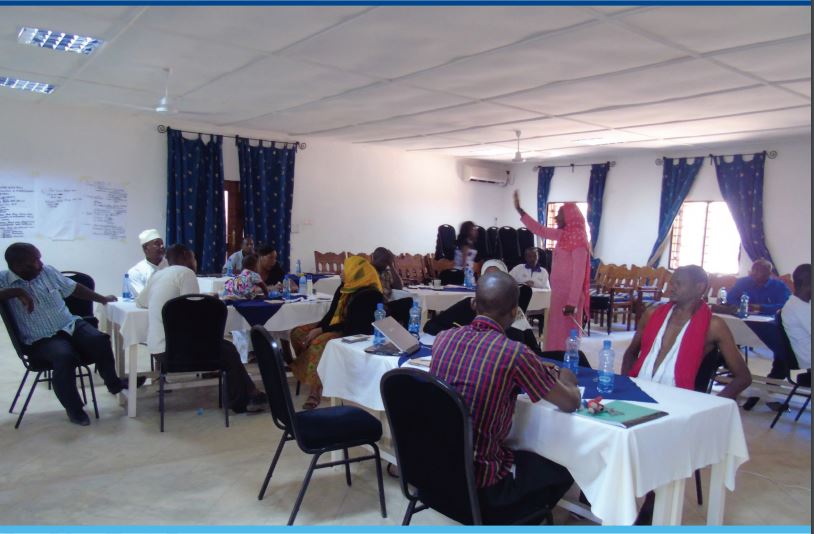
"The first two years [of this project] were devoted to an extensive eight-module training program for Christian and Muslim leaders and staff of faith-based NGOs. They, in turn, applied their newly enhanced knowledge and skills in interreligious actions in support of local Muslim, Christian, and community leaders, including youth and women, who worked together on practical local projects of shared interest [connector projects]..."
This final evaluation of a three-year capacity-building project, the Capacity for Interreligious Community Action program (CIRCA), focused on the effectiveness of the programme's ability to strengthen the capacity for interreligious action of: "a) individuals through deeper knowledge, more positive attitudes, and enhanced practical skills, and b) organizations, through growing engagements, networking, and effective cooperation with others" and the resulting learning from the findings. The November 2016 - March 2017 Catholic Relief Services (CRS) programme among Muslim and Christian communities in Egypt, Kenya, Niger, Nigeria, Tanzania, and Uganda had two objectives: 1) the support of Muslim and Christian leaders, particularly youth, to work together on practical connector projects (CPs) in their communities and 2) the engagement of partner organisations in interreligious development and peace initiatives.
Training training and practice in interreligious actions led to CPs across several sectors including potable water, natural resource management, income generation, and environmental sanitation. "A total of 118 participants went through the CIRCA training: 45 Muslims, 71 Christians, and 2 Traditionalists. Twelve connector projects were launched involving 18 partner organizations dispersed over six countries."
Kenya, Niger, and Nigeria were evaluated through data collection using semi-structured interviews, document review, observation, workshops, and a mini-survey of CIRCA trainees. Interviewers included the external evaluator and the programme manager.
Findings on Effectiveness:
- Types of project support - "CIRCA trainees identified more pastoral roles, while CP participants had a more practical, nuts-and-bolts perspective on the support received during the connector project."
- Engagement of organisations in interreligious development and peace initiatives - Engagement included "new partnerships with faith-based organizations from other religions, enhanced confidence in being able to engage effectively with the other out of a deeper understanding of their faith, and increased knowledge of and skills in facilitation and communication."
- Developing/strengthening organisational strategies for interreligious engagement - Findings included "little influence over broad organizational strategies", rather influence on interreligious actions (IRA) of individuals.
Findings on Learning:
- validity of CIRCA’s theory of change (which was: "If key CRS and partner staff develop more positive attitudes, improve knowledge and skills for Muslim-Christian cooperation, and have opportunities to develop and implement joint Muslim-Christian projects focused on the common good, then they will contribute to human development and peaceful coexistence through interfaith networks and practical action.") - "The theory of change contains incomplete results chains and outcomes unsupported by activities, and could be more user-friendly."
- additional lessons from CIRCA to enhance Muslim-Christian interreligious social cohesion efforts - "Effective IRA requires personal preparation and accurate up-to-date information about the people, issues, conflicts, culture, and religion of key stakeholders. It also requires strategic choices, transparency, and patience."
- gender dynamics - There was a need for increasing women's training and participation.
- partners' understanding of the success or effectiveness of their peace work - The findings were split in focus, either on the connector project goal (e.g., finding water) or on whether there was interreligious collaboration in the connector project.
- understanding of the religious dimension of the peace work - The programme set a balance of spiritual, cognitive, and practical motives for IRA work, allowing participants to fit their motives into the work.
CRS website, May 31 2018.
- Log in to post comments