










































Atlacatl - HIV Programme Design in El Salvador
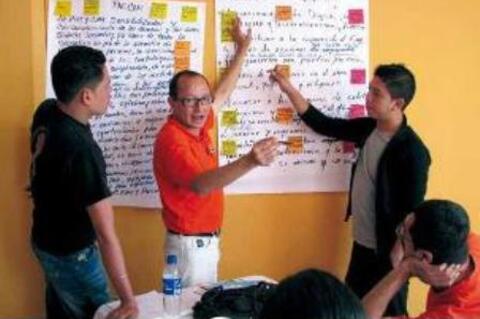
Asociacion Atlacatl Vivo Positivo (Atlacatl) works to increase access to health care and comprehensive HIV services free from stigma and discrimination for key populations in El Salvador, including gay men and other men who have sex with men, people living with HIV, sex workers and transgender women. It's programme includes communication for HIV and stigma awareness, rights advocacy at the national level, and capacity building for community assessment and project design through the Vida Digna model, adapted to El Salvador from its initial application in Mexico, an anti-stigma project modelled on the Vida Digna initiative developed in Mexico by Alliance Linking Organisation Colectivo Sol.
Atlacatl works through local partnerships and Central American HIV/AIDS networks. Its communication-related work includes:
- Assessment and project design through Vida Digna - Colectivo Sol provided technical assistance to the five local implementing partner organisations, representing key populations and Atlacatl, through a workshop training them on the use of Participatory Community Assessments (PCAs) tools. PCAs were completed, and a subsequent workshop focused on analysis of the PCA results and the project design. These organisations then designed anti-stigma projects based on the analysis of stigma and discrimination in their PCAs, received their initial grants, and started implementing activities - for example, building links with decision makers and running awareness campaigns in hospitals and health centres.
- Communication with a mobile population - Atlacatl, in partnership with a road building company, created HIV prevention and awareness with the construction workers and with the communities along the highway as workers moved through them. Its strategies included:
- a weekly hour-long radio programme with national coverage to provide information and provoke debate about HIV and AIDS, and
- a media campaign to raise awareness and fight discrimination against people living with HIV (PLHIV).
- Mapping capacity building - As part of the United States Agency for International Development (USAID)-funded AIDSTAR-Two programme, Atlacatl was also involved in mapping and did assessments in Nicaragua, Guatemala, Costa Rica, Honduras, and El Salvador to identify the capacity building needs of the Central American Human Rights Network on HIV/AIDS.
- International and national advocacy - Atlacatl uses advocacy to influence the creation of HIV-related policy at a national level and through fora such as the Central American Human Rights Network and the National Commission to reform the HIV law. The organisation created a petition to recognise a National Day of Solidarity with PLHIV.
HIV/AIDS, Rights
Atlacatl was established in 1998 by a group of HIV positive activists, who took the Salvadoran government to the Inter-American Court of Human Rights to claim the right to free medication. As a result of the court decision, the government provides all people living with HIV (PLHIV) with free medication.
Central American Human Rights Network on HIV/AIDS, Central American Network of People Living with HIV/AIDS (RedCa+), Fraternidad Gay Sin Fronteras, Orquideas del Mar, ICW (Women Living with HIV), Aspidh Arcoiris, and Movimiento por la Diversidad Sexual, Fomilenio, USAID-funded AIDSTAR-Two.
- Log in to post comments