










































Addressing Public Questioning and Concerns about Vaccination in South Africa: A Guide for Healthcare Workers
Department of Public Health, University of Limpopo (Burnett, Moloi); Faculty of Epidemiology and Population Health, London School of Hygiene and Tropical Medicine (Larson); Department of Pharmacology, University of Limpopo (Tshatsinde); Department of Epidemiology and Social Medicine, University of Antwerpen (Meheus, Paterson, François)
"...[I]t is important to build capacity among healthcare workers within the Expanded Programme on Immunisation of South Africa [EPI-SA] to enable them to deal empathically and effectively with parents and caregivers who have been exposed to anti-vaccination messages and who question the need to vaccinate their children."
This article discusses some of the claims made by South African anti-vaccination groups, including some drawn from anti-vaccination lobbyists based in highly resourced countries. Arguing that claims that vaccines cause adverse effects need to be supported by valid and reliable scientific evidence, the authors note that evidence alone that vaccines are safe and effective does not always result in parents being convinced to vaccinate their children. In addition to providing evidence of vaccine safety, this paper discusses the important role of communication - especially dialogue - in building public trust in vaccination, with the ultimate goal of increasing vaccination coverage and preventing future outbreaks of vaccine-preventable diseases (tuberculosis (TB), polio, measles, diphtheria, pertussis, and tetanus).
The article points out that increasing numbers of South Africans are accessing misinformation about vaccinations on the internet, which may have a negative impact on vaccination coverage in pockets of the country where internet usage is widespread. Outbreaks that arise in these pockets because of vaccine refusal may spill over to other provinces where vaccination coverage is low for reasons other than vaccine refusal. A measles outbreak that started in Gauteng Province, the economic hub of the country with a high level of migrant labour, and then spread to all 9 provinces is a case in point.
An excerpt from the paper follows (footnotes have been removed by the editor):
"Addressing some of the difficult questions about the risks of vaccines that South African parents who have been exposed to anti-vaccination messages may ask of HCWs [healthcare workers], has been covered in this paper. However, providing scientific evidence to questioning parents does not always result in parents being convinced to vaccinate their children. Good communication and dialogue skills are needed. Earning trust, creating awareness, deepening understanding, gaining agreement on solutions, and motivating action are goals that HCWs need to strive for when communicating the risks and benefits of vaccination to parents.
Determinants of trust include the parents' perception of the expertise of the HCW, as well as how open, honest, caring and concerned the HCW appears to be. HCWs must first earn the parents' trust before they can address their fears and suspicions. First, the HCW should acknowledge the parents' concerns, and then explain that there are safety measures in place to prevent AEFIs [adverse effects following immunisation] as far as possible, and that if they do occur, that they are extremely rare when compared to the risk of contracting the diseases that the vaccine(s) can prevent. Second, endorse fundamental values. For example, the health of South African children is EPI-SA's most important priority, which is a fundamental value shared by all parents. Third, cast a positive identity. For example, build self-confidence in parents by not ridiculing the source of misinformation that has led them to question vaccination, because they will feel defensive. Instead, empathise with parents who are genuinely worried about causing harm to their children, and give them a list of reputable books, journals and websites (such as [South African Vaccination and Immunisation Centre, or] SAVIC's) that do publish credible articles on vaccination for lay people, and admit to using these sources and finding them helpful and interesting. Finally, the key is to ensure that the information is well understood, using terms that are not confusing or too technical...
...Research is needed to (a) characterise the South African anti-vaccination lobby; (b) investigate the psychological, socio-cultural, and political determinants that have led to loss of trust in vaccination by some South African parents; and (c) measure the impact of the anti-vaccination lobby on vaccination coverage. At the same time, steps need to be taken to ensure that HCWs involved in the EPI-SA fully understand this misinformation and are prepared to address some of the difficult questions and perceptions which they may be confronted with. HCWs should be allowed the time for dialogue with questioning parents, and be supported with information and skills to listen to, and engage with parents with empathy in a way that builds trust and allows for true understanding."
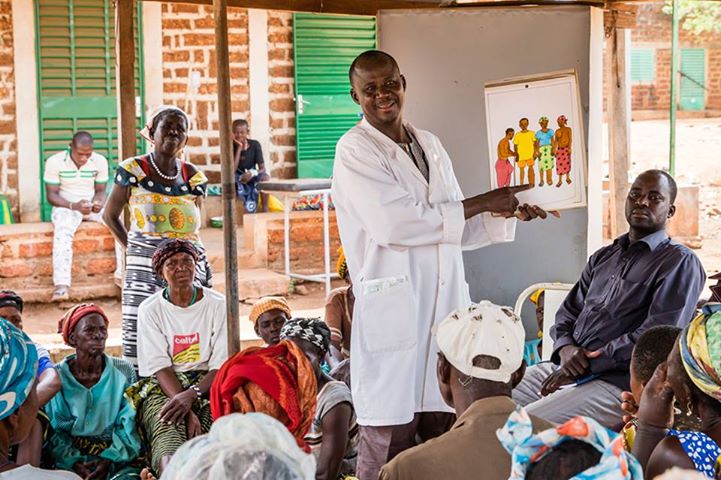
South African Vaccination and Immunisation Centre (SAVIC) website, July 29 2013. Image credit: GlaxoSmithKline
- Log in to post comments