










































Acceptance of a Text Messaging Vaccination Reminder and Recall System in Malaysia's Healthcare Sector: Extending the Technology Acceptance Model
Universiti Sains Malaysia (Karkonasasi, Cheah, Mousavi); Universiti Tunku Abdul Rahman (Vadiveloo)
"These insights may help healthcare decision-makers in making informed decisions that advance health services."
Immunisation rates against vaccine-preventable diseases (VPDs) have decreased in Malaysia in recent years, particularly for follow-up doses. The incomplete immunisation of infants has been attributed to parental forgetfulness about vaccination milestones, parents' hesitancy toward childhood vaccination, and the absence of continuous and effective communication between parents and healthcare organisations. Inefficient communication may stem from the time-consuming and resource-intensive nature of paper-based vaccination systems, which are commonly used by Malaysian healthcare institutions. Virtual Health Connect (VHC), a text messaging vaccination reminder and recall system, was developed to address this issue. In addition to examining the VHC, this paper aims to extend the limited research on the acceptance of short messaging service (SMS) immunisation reminder and recall systems in the healthcare sector by proposing a research model based on an extended technology acceptance model (TAM).
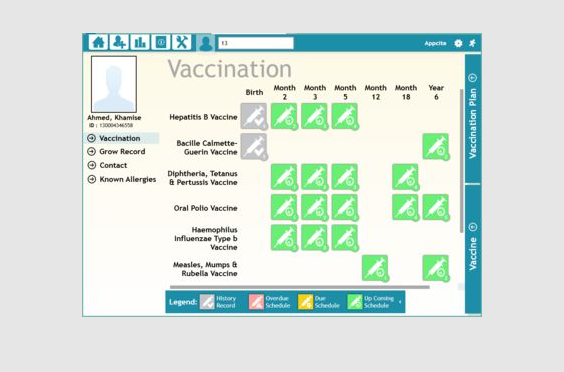
VHC, which is outlined in the video below, aims to improve the completion and timeliness of immunisations among children using VHC by reminding and recalling parents about their infants' immunisation milestones, educating them about the importance of vaccination for their infants' immunity against VPDs, and simplifying and accelerating the immunisation administration process for nurses. The system consists of two main components: a web-based application and a SMS application. When parents bring their children to healthcare organisations for the first vaccination, nurses register their information using the web-based application. The system then schedules the upcoming immunisation appointments and sends SMS reminders in English and Bahasa Malaysia to parents' cellphones two days before each appointment. If the child receives the vaccination on time, the system automatically schedules the next appointment and sends a reminder. Otherwise, the system reschedules the overdue vaccination and recalls the parents two days before the new date. This process continues until the child is fully immunised. VHC is designed to be easy to install, maintain, and operate on electronic devices in the workplace.
According to the TAM, a user's attitude toward behaviour and subjective criteria determine their behavioural intention towards technology, which in turn impacts their behaviour. The original predictors of TAM are perceived ease of use and perceived usefulness. The researchers attempt to address the limitations of TAM by proposing new predictors of attitude - namely, (i) perceived compatibility (the extent to which the system is perceived to be compatible with the current values and prior experiences of nurses, as well as their requirements in the workplace in administrating childhood vaccinations) and (ii) perceived privacy and security issues (the extent to which nurses believe that using the system could compromise the privacy and security of children's and parents' personal information).
The researchers conducted a survey among 121 information technology (IT)-literate nurses in Malaysian government hospitals and clinics to test the proposed research model. They then analysed the collected data using partial least squares structural equation modeling (PLS-SEM) to examine the significant factors influencing nurses' attitudes and intentions to use VHC. Moreover, they applied an artificial neural network (ANN) to determine the most significant factors of acceptance.
The results highlighted that the compatibility of VHC with the current work setting of nurses inspired their positive perspectives on the system. Moreover, the nurses felt optimistic about the system when they considered it useful and easy to use in the workplace. Finally, their attitude toward using VHC played a pivotal role in increasing their intention to use it. Based on the ANN models, the researchers found that the most significant predictor of attitude was perceived compatibility (100%), followed by perceived ease of use (66.73%), and perceived usefulness (36.10%). The researchers could not determine any negative or significant relationship between perceived privacy and security issues and attitude, perhaps because VHC minimises the recording of any sensitive records in the database and applies the latest encryption techniques to secure the stored data.
Despite the significant relationship between perceived usefulness and attitude, this factor did not impact nurses' intention to use VHC significantly. A majority of the respondents had not previously used such systems in their workplaces. Consequently, their perceived usefulness of the system may not significantly increase their intentions, possibly due to a lack of expertise in utilising the system.
The researchers note that, in addition to using SMS as the primary communication channel, incorporating automated phone calls can be beneficial for parents with impaired vision. This additional feature can improve accessibility and ensure that all parents receive important immunisation reminders. Furthermore, utilising email-based reminders can enable nurses to provide more comprehensive educational information to parents, emphasising the significance of immunisation and addressing any potential concerns or questions they may have.
Implications of the findings include, for example:
- The findings may help inform managerial and software development practices within the healthcare industry, particularly with regard to the development, implementation, and acceptance of VHC and similar systems, which may ultimately lead to raising childhood vaccination coverage and protecting infants against VPDs.
- The findings could contribute to the currently limited literature on the acceptance factors of these systems and mitigate the limitations of TAM by providing further knowledge about the predictors driving positive attitudes toward the systems.
Among the suggestions for future research: Trial studies should be conducted to evaluate the effectiveness of VHC in improving the completion and timeliness of immunisations among infants.
Vaccines 2023, 11,1331. https://doi.org/10.3390/vaccines11081331; and Keng Siang Ooi's YouTube channel and Cheah Yu-N's research project page - both accessed on August 9 2023. Image credit: VHC
- Log in to post comments